
Cushion Cut Diamond Guide
With its soft lines and diverse options for proportion and colour, the cushion cut diamond embodies feminine archetypes of affection and luxury, with a twist of variety and exclusivity. The classic shape and appeal of these diamonds preceded the invention and popularity of the now-famous brilliant cut round diamond, however cushion cut diamonds are making a big comeback. They are increasingly being seen on the ring fingers of famous singers, Hollywood actors, and style influencers.
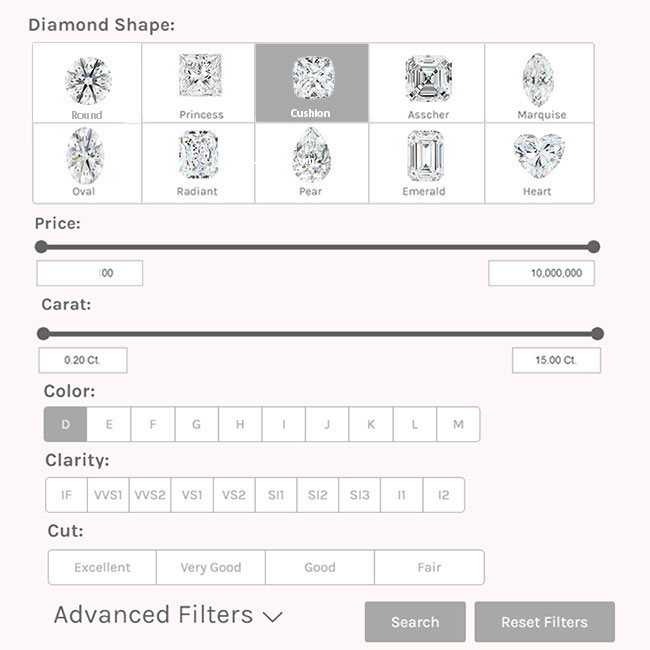
The Cushion Cut Diamond
Cushion cut diamonds come in a range of shapes and sizes, can be more rectangular or more square-shaped in appearance, but their most distinctive quality is that, as seen from above, they have softened lines and gently rounded corners. They literally look like luxurious, plush pillows.
The cushion-shaped diamond has been around since at least the early 19th century, and was the preferred diamond of choice prior to the invention of the brilliant, round cut diamond. A cushion cut diamond usually has the same number of facets as a brilliant round cut diamond, maximising sparkle, but the price of a cushion cut diamond is about 25-50% less than that of a brilliant cut round diamond – and it looks more unusual than a round cut diamond.
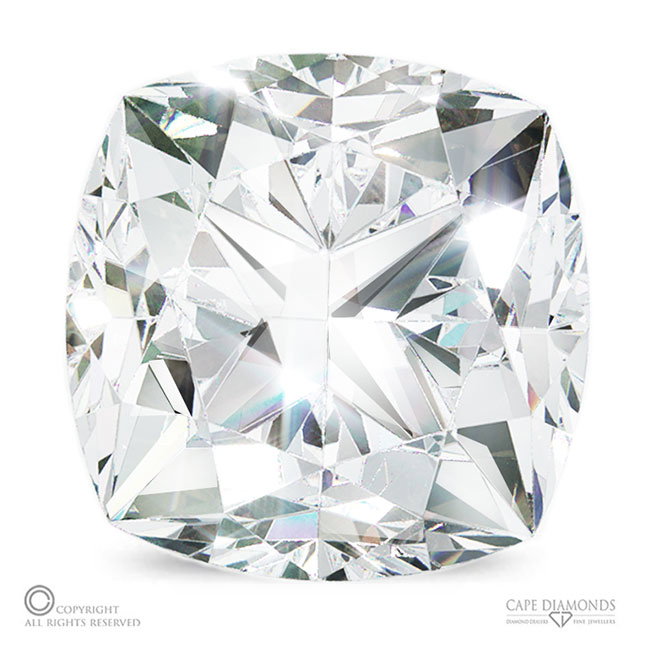
The cushion shape has a vintage appeal that evolved from hand-cut, ‘Old World’ diamonds. This vintage style is lacking in more modern shapes, making the cushion cut diamond a perfect choice if you’re looking for a stone with character and a venerable history. With no sharp edges to scratch, bump or catch on clothing, your cushion diamond is unlikely to snag or damage delicate fabrics such as silk and nylon. The lack of sharp corners or harsh lines can also make it less prone to chipping or cracking. As can be seen in high-end fashion magazines, the antique appeal of this diamond can be paired with a voguish twist by setting your cushion cut diamond in a modern setting or fancy colour design.
The cushion cut is derived from and similar to the shape of the “old mine” diamond, which is the oldest known cut of diamond in the world. All “old mine” diamonds were cut by hand, as they were cut before the advent of mechanised or laser diamond-cutting equipment. Both the “old mine” cut and the updated brilliant cushion cut diamond are regarded as antique styles.
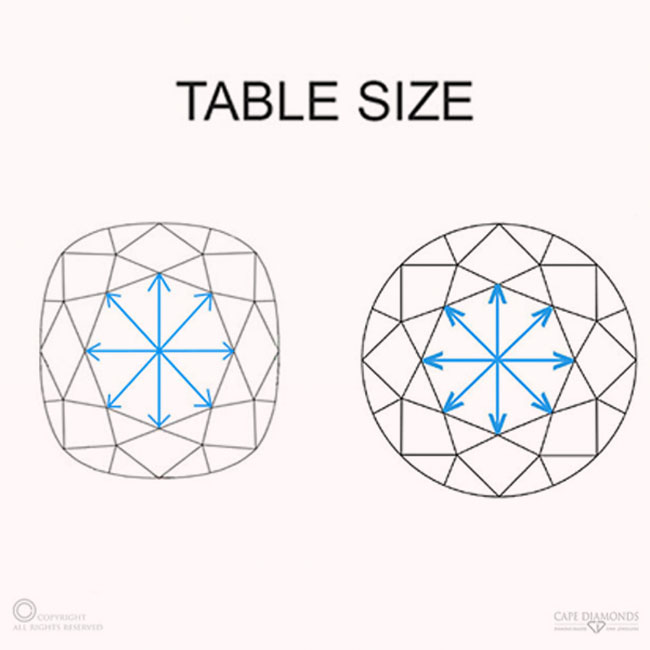
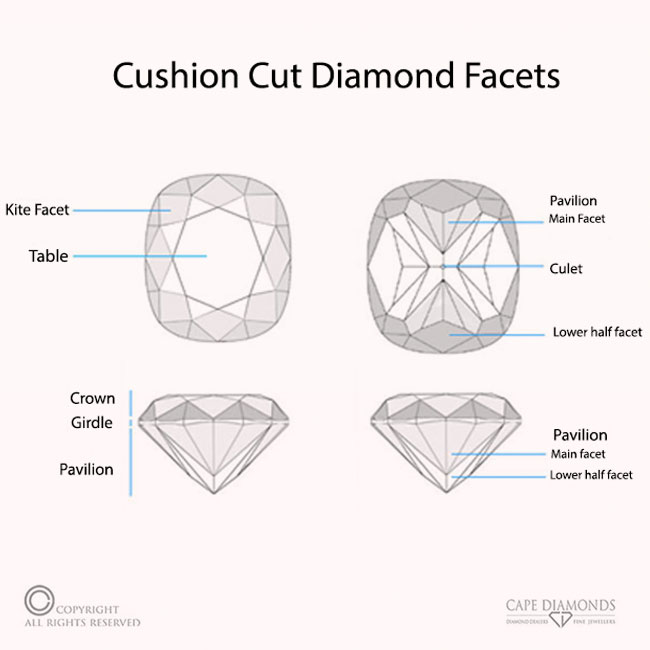
There are subtle differences between these two types of diamonds, however. The modern cushion cut was influenced by the fire and scintillation of the brilliant cut, invented by Marcel Tolkowsky in the early 20th century. As with a brilliant cut round diamond, there are usually 57-58 facets in a brilliant cushion cut diamond, depending on whether there is a culet facet at the base of the stone. A cushion cut will have a larger table than an “old mine” cut diamond, and no culet or a very small culet. The cushion cut will also have a lower crown and shallower pavilion than an “old mine” cut diamond. Like a brilliant cut round diamond, the pavilion facets of a modern cushion cut diamond resemble a star, creating more sparkle and light.
The Queen of Variety
The cushion cut diamond is the queen of shapes, as it is available in such a great variety of contours and proportions. Though there are usually 57-58 facets in a cushion cut diamond, there is no one ideal shape or cut. Each variation tends to appear rare and unique. For example, one of the most famous cushion cut diamonds in the world is the Hope Diamond, a massive blue stone of 45 carats that was purchased in India in the 17th century. Its cut is described as a “cushion antique brilliant with a faceted girdle and extra facets on the pavilion”.
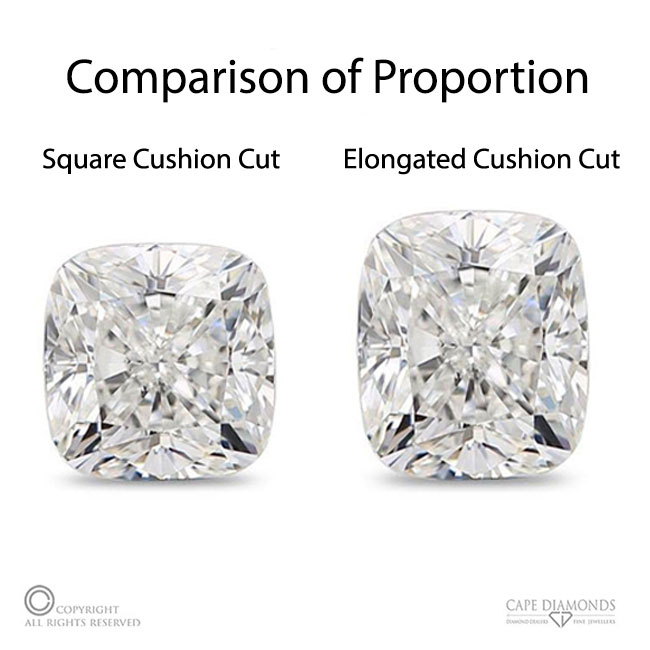
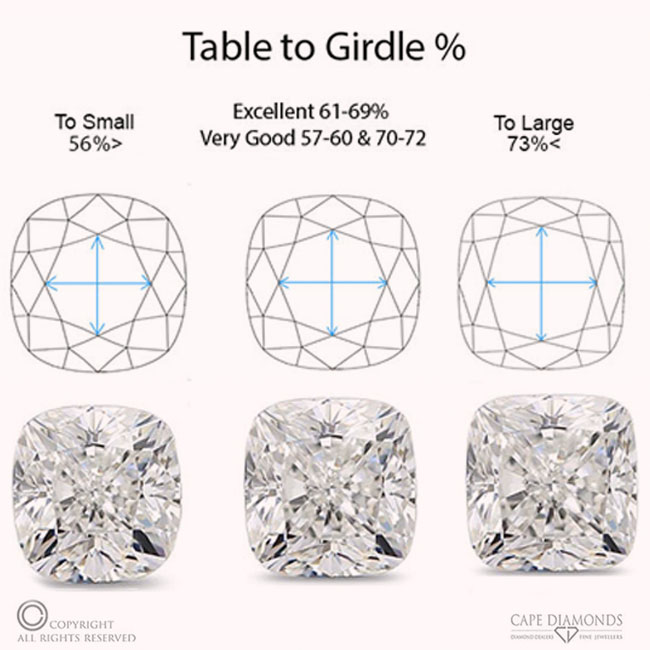
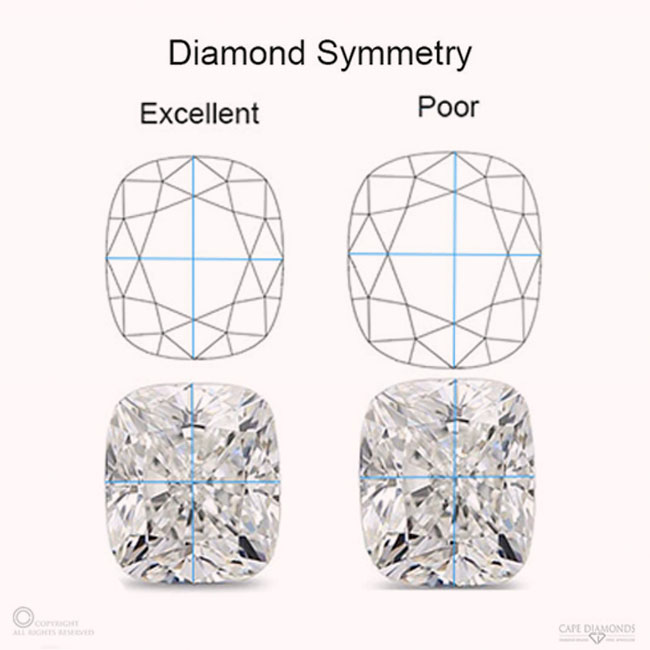
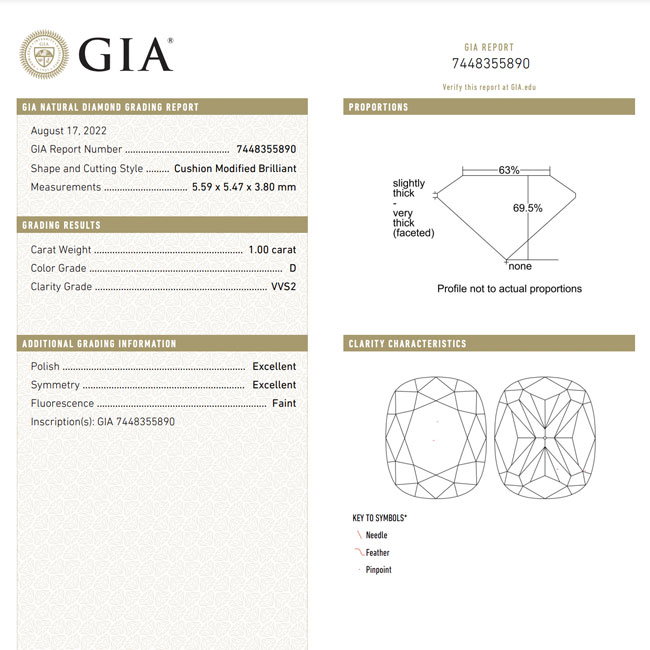
When shopping for a cushion cut diamond, look out for your preference of length to width ratio, as well as colour. Because the cut embodies its history of combining antique with modern, there are cushion cuts for every taste, from the eclectic to the purist. Since there are so many variations, and no cut grade will be specified on the GIA certificate, if you want a quality stone with maximum sparkle, be sure to check the facets of a cushion cut diamond, with the aid of a reliable diamond dealer such as Cape Diamonds. Similarly, symmetry must be verified as this is vital to the appearance of the stone. As with other diamonds, ideally each half of the stone, vertically and horizontally, as seen from above, should match the other half.
The Pavilion Depth and Angle
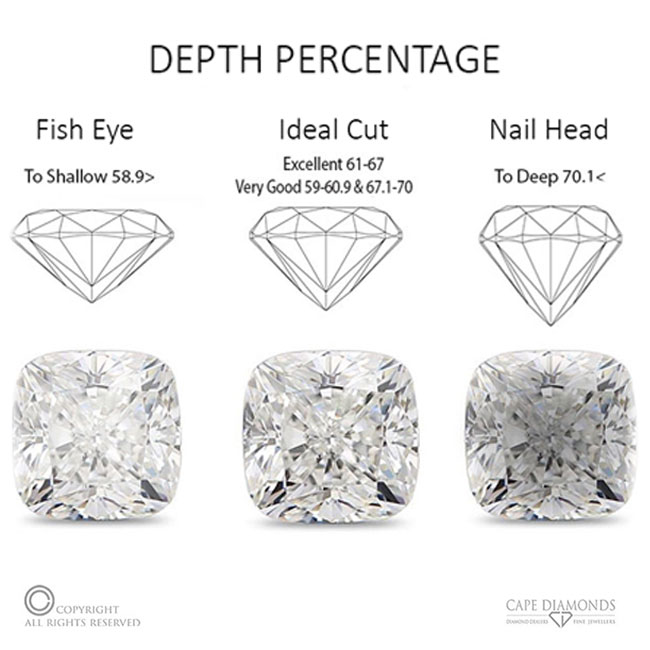
The pavilion depth and angle are also significant for maximum radiance and scintillation. The pavilion is the cone-shaped part of the diamond from girdle to base. The depth percentage of the pavilion is calculated as the percentage of the pavilion depth relative to the girdle diameter. The pavilion has main facets and lower half facets that reflect fiery sparkles of light when cut to ideal proportions. A shallow pavilion angle can result in a “fish eye” effect, while a pavilion angle that is too steep can result in your diamond looking like a “nail head”, with a dark centre.
Your Cushion Diamond Engagement Ring
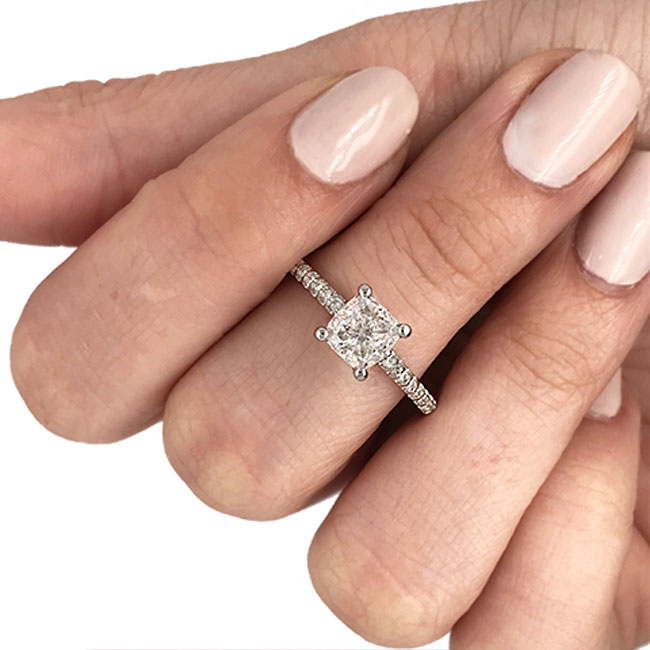
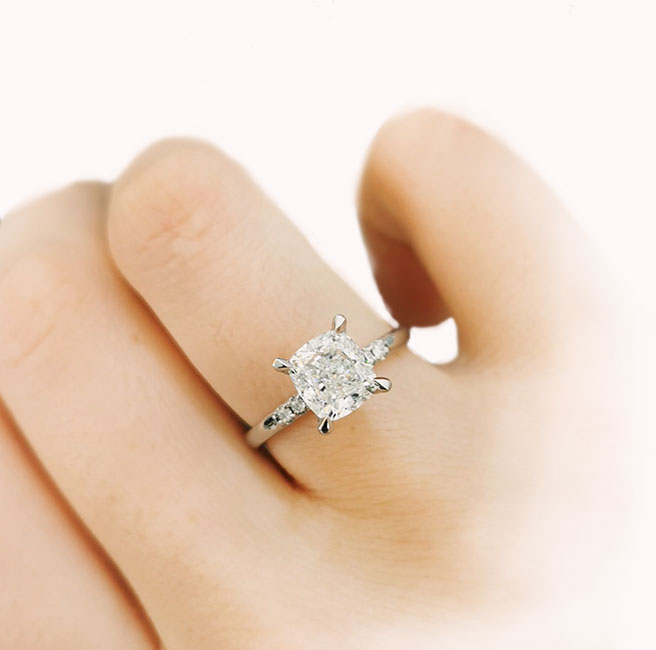
The cushion cut diamond is extremely amenable to any setting, whether you choose a solitaire, halo, or side-stone setting. It also pairs well with a matching wedding band that can slide under the one side of the stone. The most popular and widely available cushion-shaped diamonds are modern brilliant cushion cuts – but you may come across more rare versions of the cushion-shaped diamond. Cushion modified brilliants have an extra row of facets on the pavilion, below the girdle, creating a floral effect. This cut gives the stone a unique and beautiful “crushed ice” appearance.
Cushion Cut Value
These diamonds tend to be less available as there is less demand for them, but they are also less expensive than brilliant cushion cut diamonds, as more carats are saved when cutting them.
Purchasing A Cushion Cut Diamond
Whatever your style and preference, there is a cushion shaped diamond out there to match it. And one thing is for sure: When you are looking at the shape and facets of a cushion cut diamond, you are looking into the history of a bygone era, elegantly reclaimed in the present.
South Africa's Most Trusted Jeweller

Most 5 Star Reviews in South Africa
Trip Advisor
Rated No1 Retail Store in Cape Town
