
Round Brilliant Cut Diamond Guide
Round diamonds are unmatched in their classic appeal, and account for most of the sales of diamonds in South Africa. Cape Diamonds is situated in Prestwich Street near the V&A Waterfront in Cape Town and only sells GIA-certified brilliant cut round diamonds that are eye-clean, with no inclusions overtly visible to the naked eye. A brilliant cut round diamond in an engagement ring is an impeccable choice for any bachelor looking to propose.
Round Diamond Cut
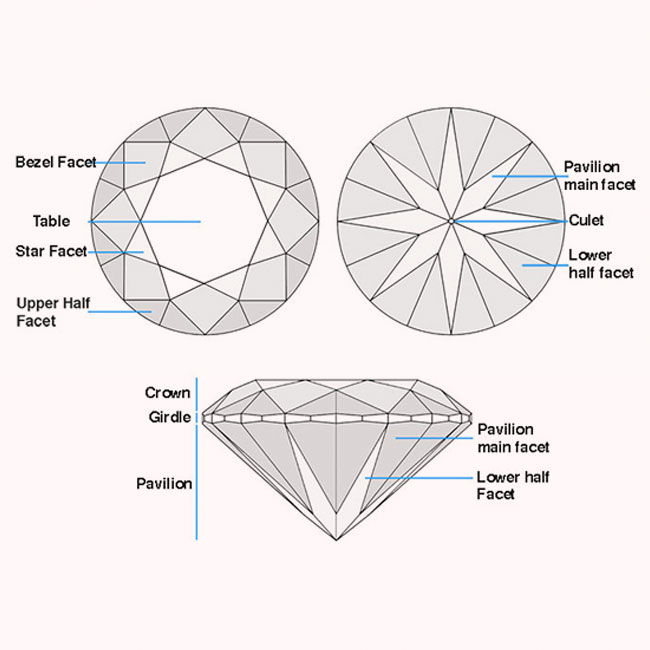
The brilliant cut round diamond, also known as the American ideal cut or Tolkowsky ideal cut, has 57 or 58 facets, ensuring maximum sparkle and incandescence. The 58th facet is optional and known as the culet, a facet at the base of the diamond. If the base of the brilliant cut diamond is pointed, it has no culet, and only 57 facets. The culet may be small or medium, but large size culets can negatively affect the light reflecting out of the diamond, so check this detail carefully when purchasing a diamond.
The Brilliant Cut
Diamond cutters have spent hundreds of years considering how light reflects out of diamonds, and perfecting the best mathematical and optical proportions for a brilliant cut diamond. The individual proportions and cut of a diamond create balance between brilliance, the radiant bright white light emitted from the diamond, and fire, the prismatic sparks of light that the diamond flashes at the viewer through its angles and facets.
Diamond Grading
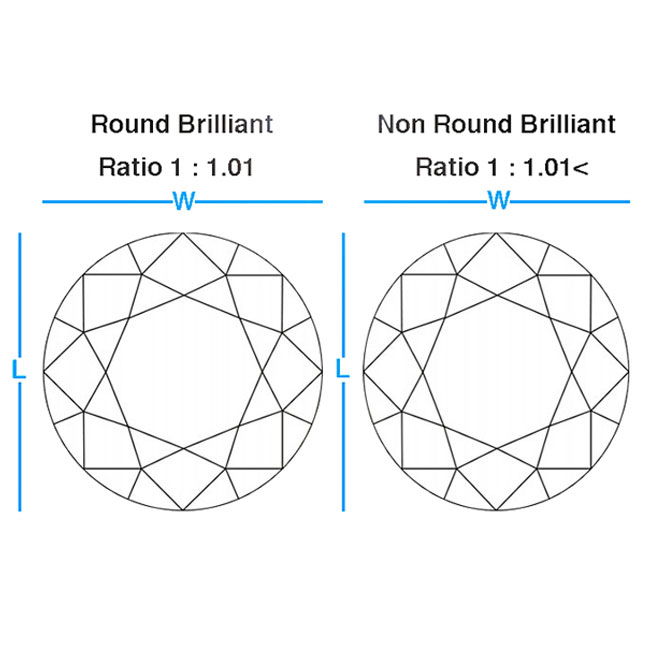
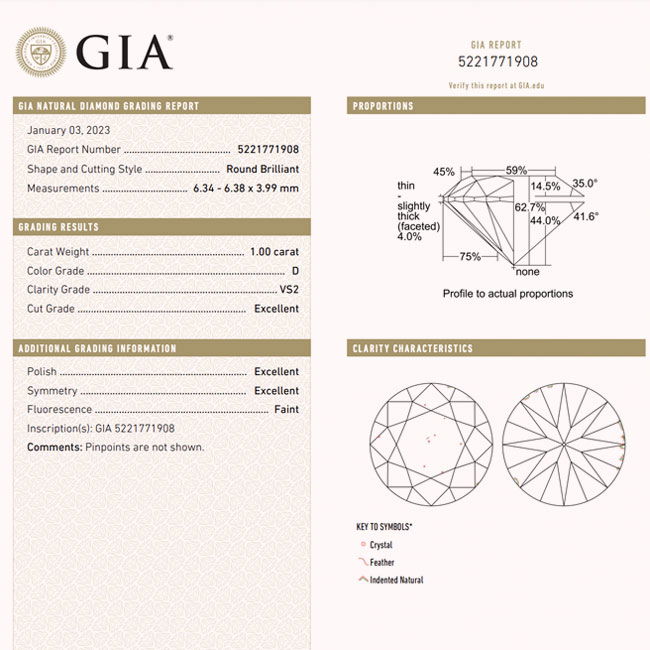
The overall cut grade will be reflected on the GIA certificate of your diamond, for example “very good”. The certificate will also grade the polish and symmetry of the diamond, and will indicate whether the diamond has phosphorescence or not. In order to know the optimal cut of a brilliant-cut round diamond for an engagement ring, you will need to understand the ratios and proportions that contribute to radiance and fire, and contribute to the GIA grading, from “excellent” to “poor”. Cape Diamonds only recommends GIA-certified diamonds that have gradings of “excellent” to “good”.
The Girdle Diameter
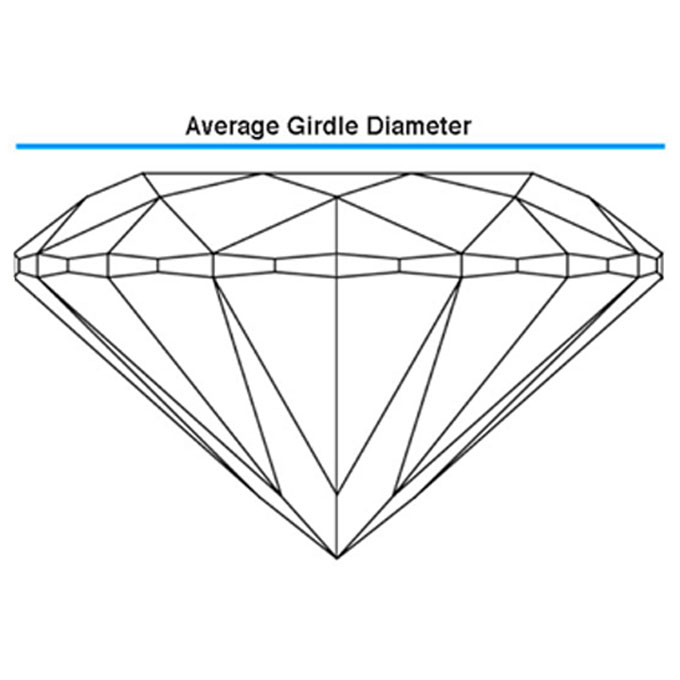
The girdle diameter of the diamond is the average widest diameter of the diamond when viewed from above. The girdle diameter measurement is key as it determines the proportions of the brilliant cut diamond. Most percentage proportions of the brilliant cut round diamond are calculated as percentages of the girdle diameter.
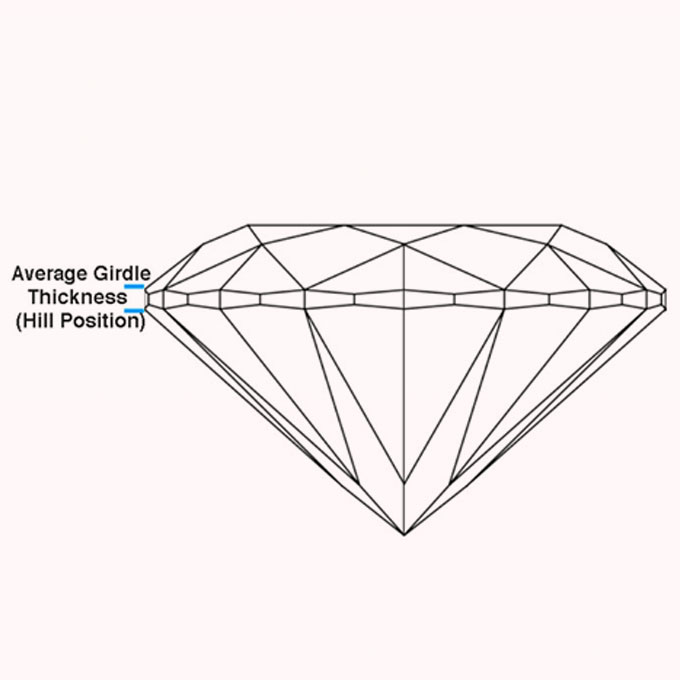
The Girdle Thickness
The girdle should not be too thin or too thick on the edges. The average girdle thickness percentage is calculated as a percentage of the girdle diameter. Thin is <1 %, Medium is 1%- 3% and Thick is 4%<
The Table
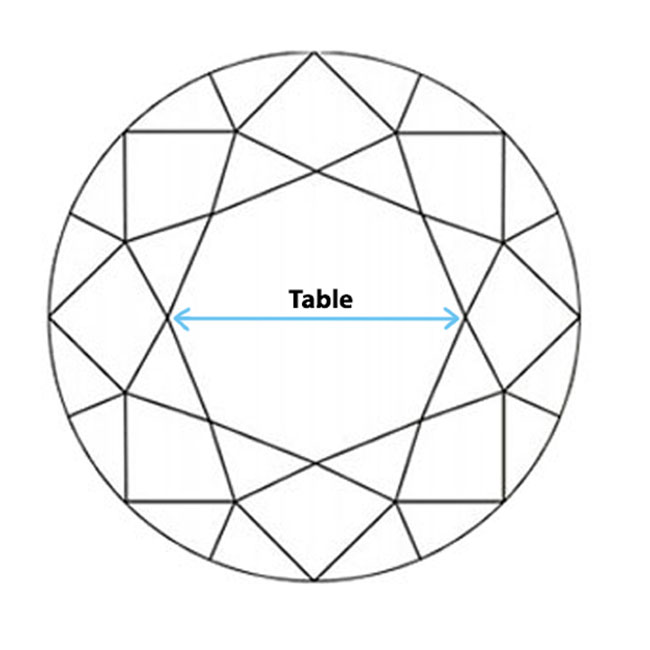
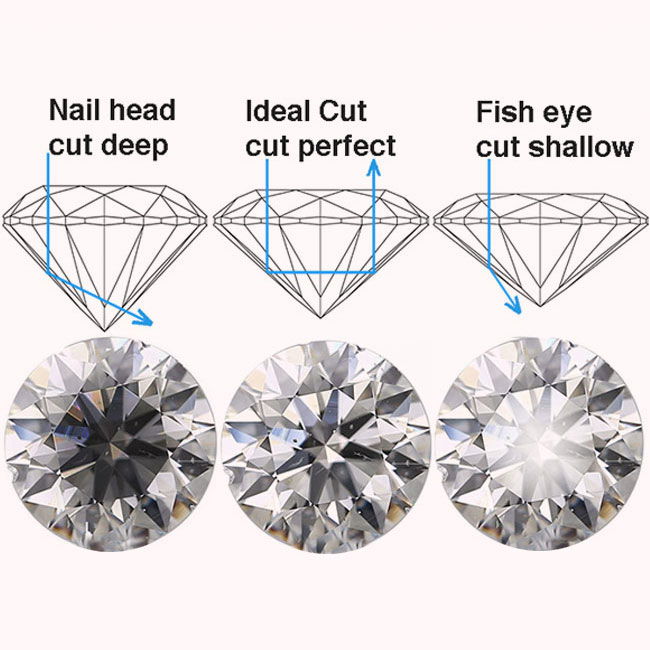
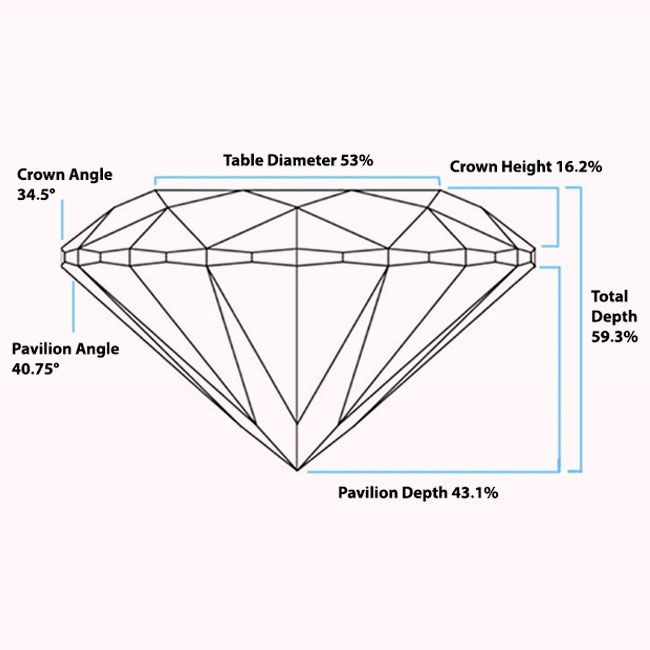
The table of the diamond is the largest facet, the flat part on top of the diamond. Having an advantageous proportion of table to girdle diameter creates the greatest aperture of sight into the stone and the greatest diamond brilliance. A good-sized table, measured as an average of the four widest points of the table, allows us to see into the diamond, but having too large a table percentage can create a flat effect, with little radiance and fire, known as the “fish eye” effect. The table size, calculated as a percentage of the girdle diametre, will be indicated on the diamond’s GIA certificate.
The Total Depth
The total depth of the diamond plays a vital part in the scattering of light throughout the diamond, determining how much brilliance and fire glitters from the stone. The depth is measured from the table of the diamond to the culet or base point, and is calculated as a percentage relative to the girdle diametre of the diamond.
The Crown Height and Angle
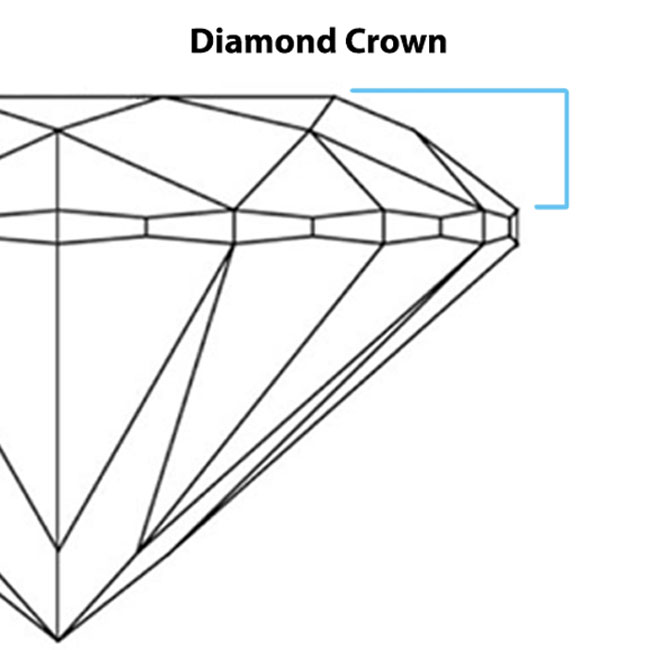
The crown height and angle also contribute to coruscation and sparkle. The crown is the top part of the diamond, from the table to the girdle, and the crown height is calculated as a percentage of the average girdle width. Having a high crown percentage makes for a larger crown angle.
Crown Facets and Star Facet Length
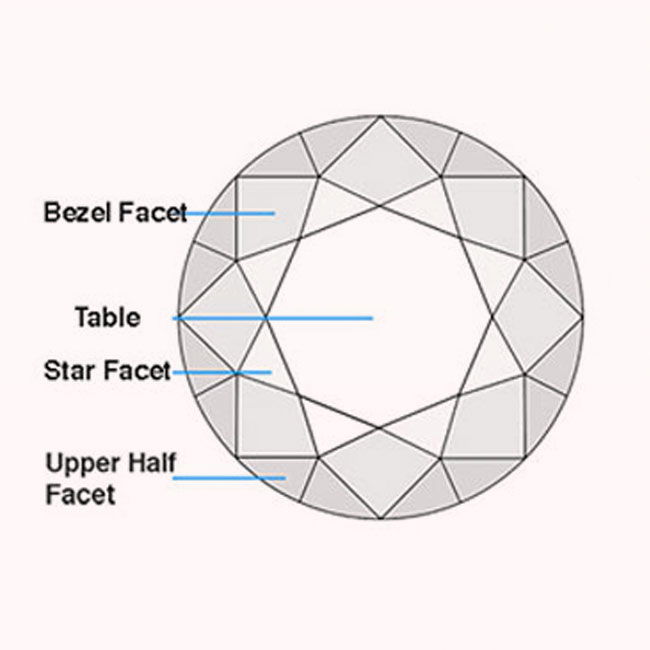
The crown of a brilliant cut diamond has 8 star facets, 8 bezel facets and 16 facets known as upper halves. If the facets are too short or too long the diamond can lack fire. The star facet length is calculated as a percentage proportion of the table edge to girdle edge measurement.
The Pavilion Depth and Angle
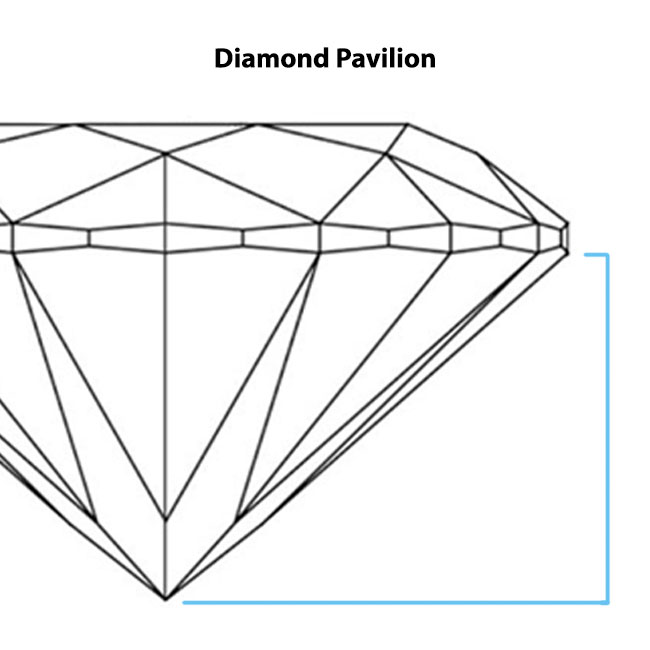
The pavilion depth and angle are also significant for maximum radiance and scintillation. The pavilion is the cone-shaped part of the diamond from girdle to base. The depth percentage of the pavilion is calculated as the percentage of the pavilion depth relative to the girdle diameter. The pavilion has main facets and lower half facets that reflect fiery sparkles of light when cut to ideal proportions. A shallow pavilion angle can result in a “fish eye” effect, while a pavilion angle that is too steep can result in your diamond looking like a “nail head”, with a dark centre.
Perfect Proportion
Together, the various proportions contribute to the diamond cut being graded from “Excellent” to “Poor”, by GIA laboratories. Although Marcel Tolkowsky, the “inventor” of the brilliant cut round diamond, specified “ideal” proportions for a brilliant cut diamond (for instance, a table percentage of 53%, a crown angle of 34.5 degrees, and a pavilion angle of 40.75 degrees), these proportions are not absolute, and a range of proportions would be graded by the GIA from “Excellent” to “Good”. This is because the proportions and ratios of a diamond are relative to one another in producing brilliance and sparkle, and every diamond is unique.
The Perfect Carat size, Colour, and Clarity
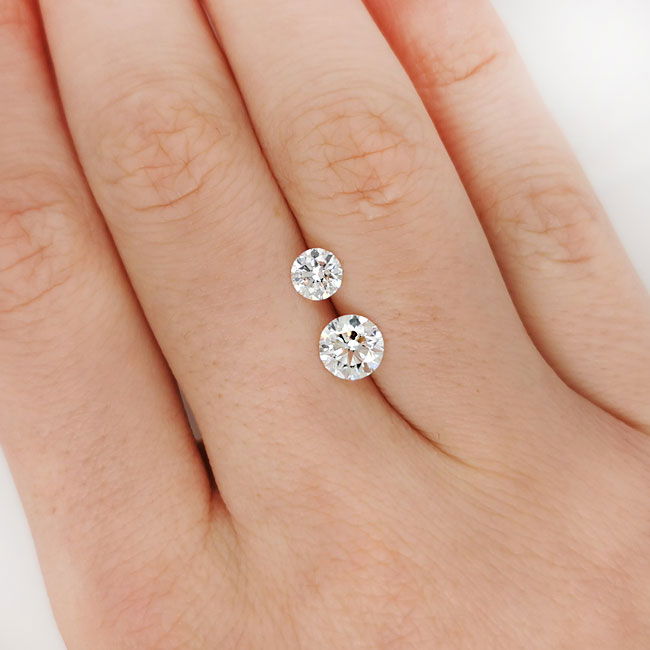
When it comes to choosing the size of a round diamond, a woman would often prefer to say that she has a half-carat or full carat diamond in her engagement ring. This is a good reason for choosing such sizes, yet a round diamond that is slightly below one carat, for instance, may look almost identical to a round diamond of one carat, but cost considerably less. Because a diamond is an investment, the most important part of your decision is considering quality relative to quantity.

The Ideal Round, Brilliant Cut Diamond
This is why it is important to consider the cut of the diamond, as explained above. But you will also likely require expert advice. Thus it is vital to allow our experienced team at Cape Diamonds to assist you when selecting combinations of features, including carats, cut, colour and clarity. At Cape Diamonds we recommend GIA-certified diamonds in the colour ranges from D to I, and for clarity we endorse GIA-certified diamonds in the range vs1 to si2.
South Africa's Most Trusted Jeweller

Most 5 Star Reviews in South Africa
Trip Advisor
Rated No1 Retail Store in Cape Town
