
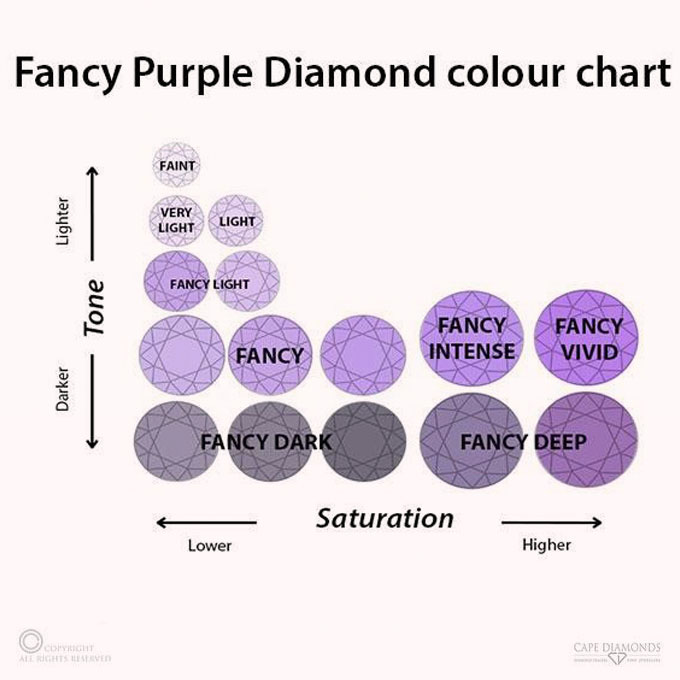
Fancy Purple
Natural fancy purple diamonds with pure colour are extraordinarily rare and typically weigh under 5 carats, often less than 2. The source of their colour is a mystery, possibly linked to boron, hydrogen, or crystal structure anomalies. Light purple diamonds come in shades like lavender, lilac, orchid, and mauve, perfect for stunning engagement rings.
Pure purple diamonds are primarily found in South Africa and Russia. The Argyle Mine in Australia produces nearly all pure violet diamonds. Over 32 years, the Argyle Tender, an annual sale of the mine’s best fancy coloured diamonds, has yielded only 12 carats of violet diamonds.
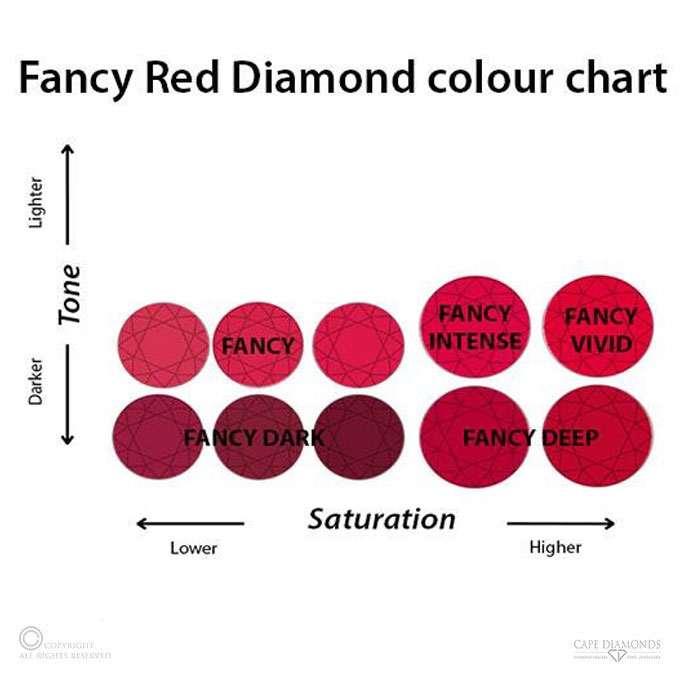
Fancy Red
Fancy red diamonds are the rarest and most valuable of all coloured diamonds, with only around 30 known to exist. The GIA grades a “Fancy Red” diamond roughly once every 30 years. Mostly found in Australia’s Argyle mine, these diamonds also come from Brazil, Russia, and India. Their unique red colour likely results from structural defects called ‘plastic deformation,’ where grain lines cause the red hue. The more graining, the more intense the colour. Due to their extreme rarity, red diamonds command the highest price per carat
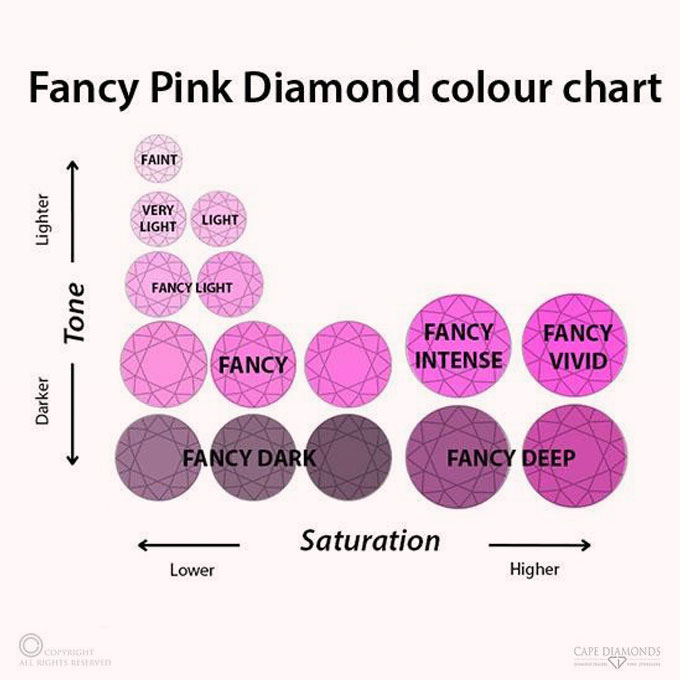
Fancy Pink
Pink diamonds have been found in limited quantities worldwide, with significant discoveries in India and Brazil in the 17th and 18th centuries. Since the late 1980s, over 90% of fancy pink diamonds have come from Australia’s Argyle mine. Most pink diamonds display fluorescence, which rarely affects their price negatively. According to the GIA, over 80% of pink diamonds exhibit some fluorescence. While fancy pink diamonds often have inclusions, their rarity means colour is the primary factor in their valuation, rather than clarity.
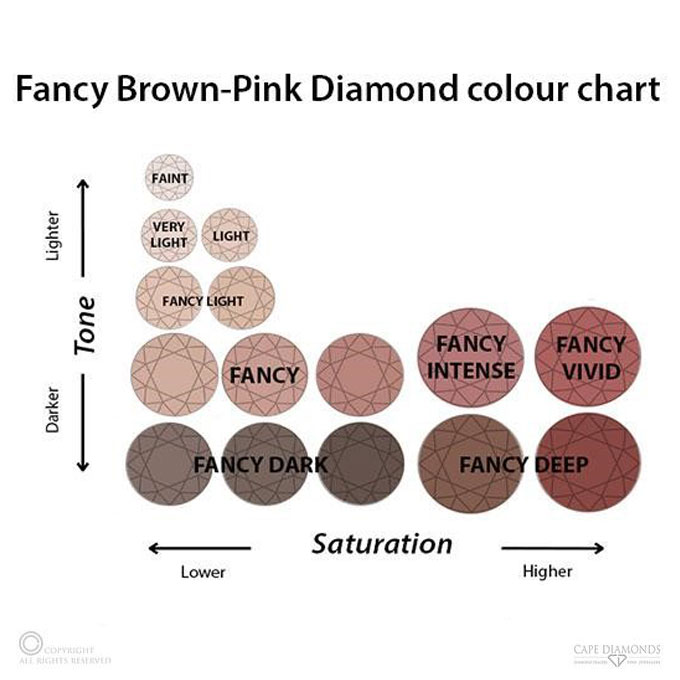
Fancy Brown-Pink
A “brownish pink” diamond has a subtle brown hue, while a “brown pink” diamond has a more noticeable brown colour. Brownish pink diamonds contain about 25% brown, and brown pink diamonds contain 25-50% brown. Brownish pink diamonds vary widely in the influence of the brown hue, affecting their price. Pure pink diamonds are more expensive, and the addition of brown reduces the price. Ultimately, the choice depends on personal preference for the diamond’s appearance.
Fancy Brown
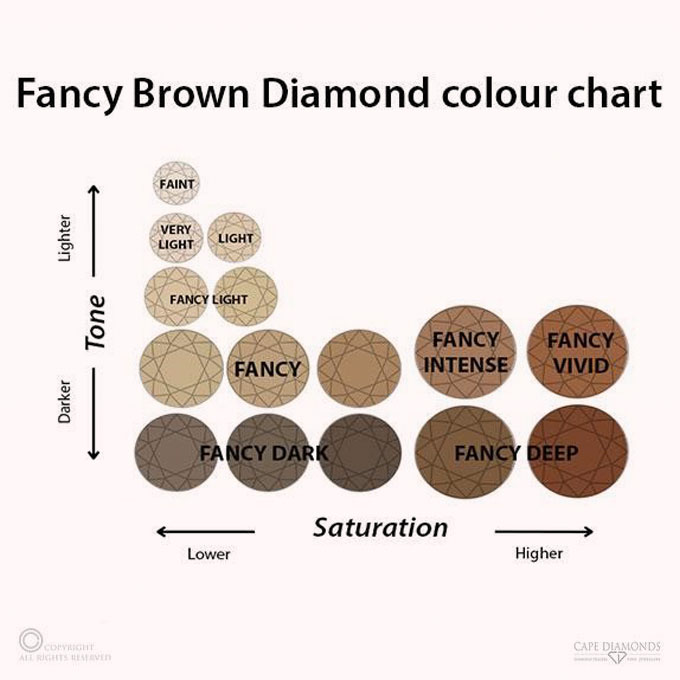
Brown diamonds, also known as Cognac, Champagne, or Chocolate diamonds, are among the most common and affordable coloured diamonds, along with yellow and black diamonds. They come in shades from light to rich brown. The C1 to C7 scale grades them, with C1-C2 being the lightest and C7 the darkest.
The intensity and vividness of the colour increase the value of brown diamonds. They provide a striking contrast in jewellery, especially when paired with white diamonds. Unlike the D-Z scale for colourless diamonds, the brown diamond scale measures colour saturation, not absence of colour.
Fancy Brown-Yellow
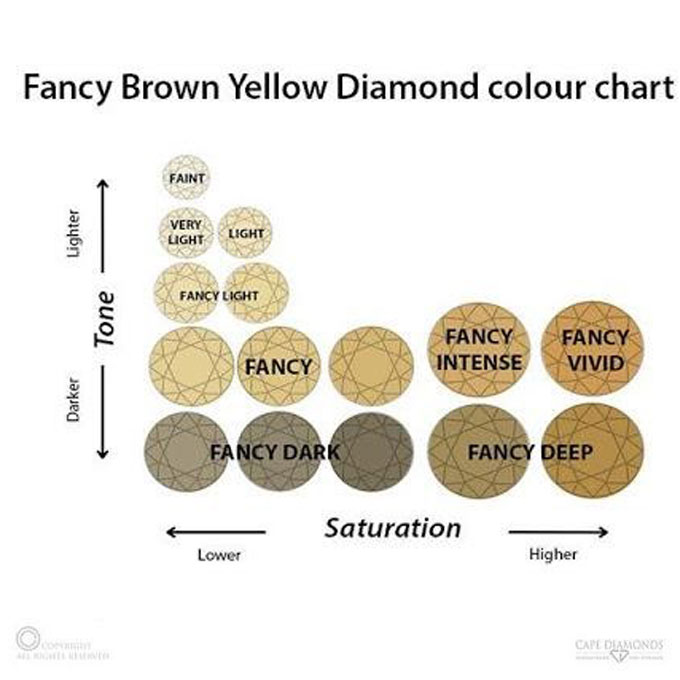
Yellowish-brown diamonds have a tint of yellow, while yellow-brown diamonds have a stronger yellow hue, making them brighter. The browner the diamond, the lower its price. The GIA grades these diamonds from most to least expensive as follows: Brownish Yellow, Brown Yellow, Yellow Brown, Yellowish Brown
Pricing fancy coloured diamonds is complex due to the variety of hues and secondary tones. Even diamonds with the same GIA colour grade, weight, and cut can vary significantly in price, as GIA’s Fancy Coloured Diamonds colour grades allow for substantial variations in appearance and valu.
Fancy Yellow
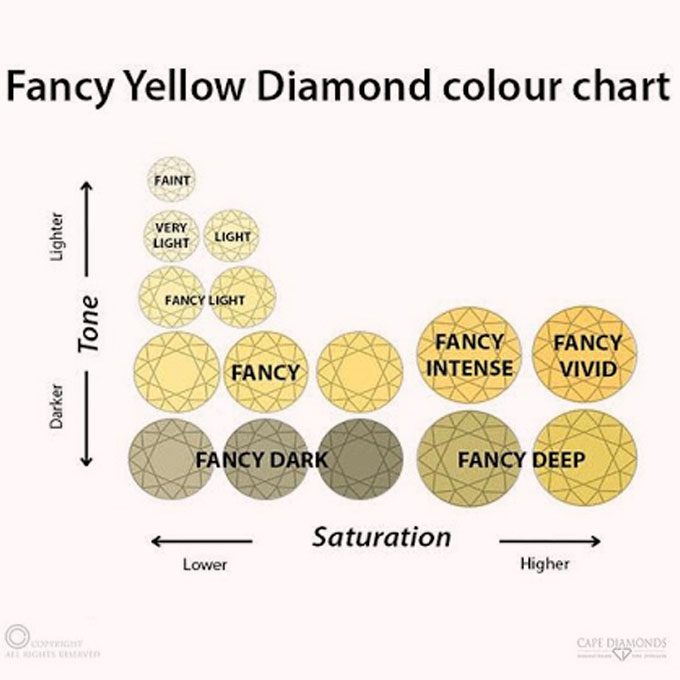
The diamond colour scale for white diamonds ranges from D to Z, with closer-to-Z diamonds displaying a pale yellow tone, which lowers their value. Natural fancy yellow diamonds, also known as Canary diamonds, start where the D-Z scale ends and are valued for their strong yellow colour and unique characteristics. Zimmi yellow diamonds, from Sierra Leone, are noted for their beautiful yellow hue.
Fancy yellow diamonds get their colour from nitrogen in their atomic structure. The more nitrogen present, the more vibrant the yellow colour. Unlike white diamonds with a yellow tint, fancy yellow diamonds are prized for their rich yellow colour and higher saturation.
Fancy Green
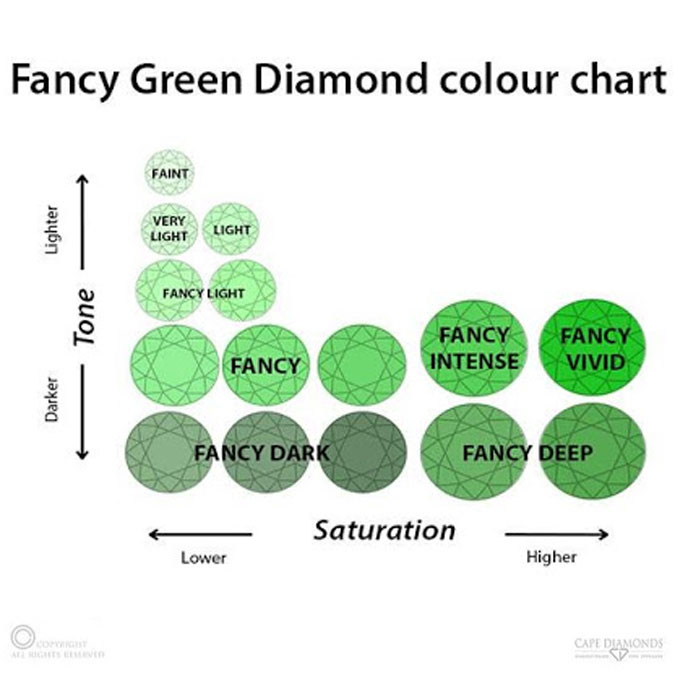
The colour of green diamonds comes from exposure to radioactivity and atomic radiation over millions of years. They range from light green to deep hues, and their colour grade considers both colour and intensity levels. Due to uneven exposure, achieving a uniformly green diamond is rare. Factors influencing their colour include the type and duration of radiation exposure, as well as diamond size.
Identifying natural versus treated green diamonds can be challenging. Some polishers leave a “Natural” mark on the diamond, an unpolished area that shows the rough’s natural colour. This helps gemologists certify the diamond’s natural origin accurately.
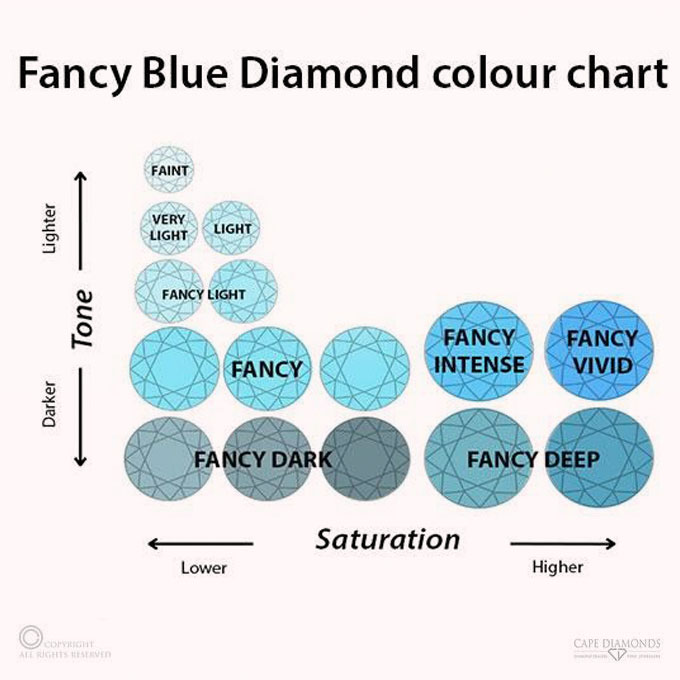
Blue Diamonds
Blue diamonds trace their origins to 17th-century India, where they were initially mined. Today, most blue diamonds come from South Africa. These diamonds rarely exhibit a pure blue colour but often show overtones influenced by boron, such as Gray Blue or Green Blue.
The tone of a blue diamond refers to its lightness or darkness, impacting its perceived intensity. GIA grading doesn’t distinguish tones, but darker-toned diamonds can appear more vivid. Blue diamonds typically do not fluoresce.
Due to high demand and limited supply, blue diamonds are valued as excellent investment opportunities, sought after by collectors and enthusiasts alike for their rarity and enduring appeal.
Fancy Brown-Green
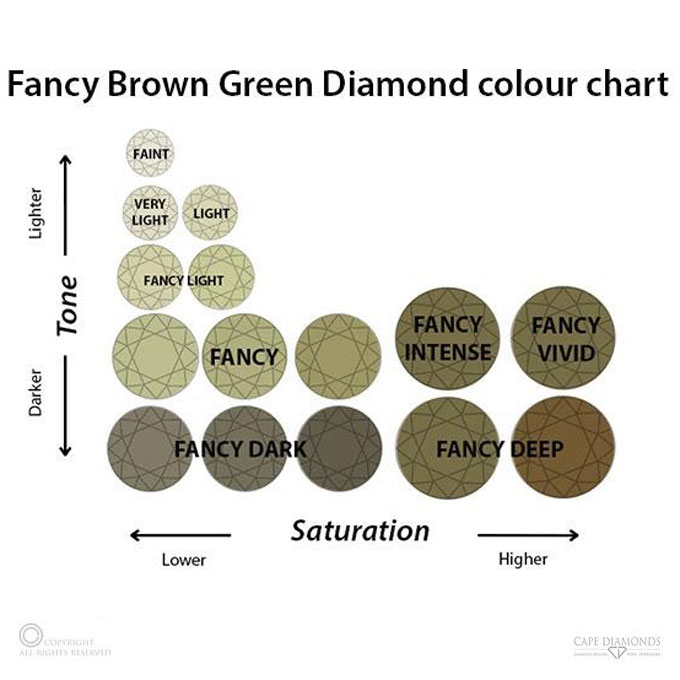
Brown Green diamonds are more common than green diamonds and because of this their pricing is much more friendly to the purchaser. Brown – green describes a diamond with a base clour of brown with green hues. The internet sometimes calls these diamonds Chameleon diamonds.
However, Chameleon diamonds are a completely different phenomenon altogether. A fancy light brown green diamond is possibly the best alternative colour to a green diamond. Brown green diamonds get their colour from radiation in the earth.
Fancy Yellow-Green
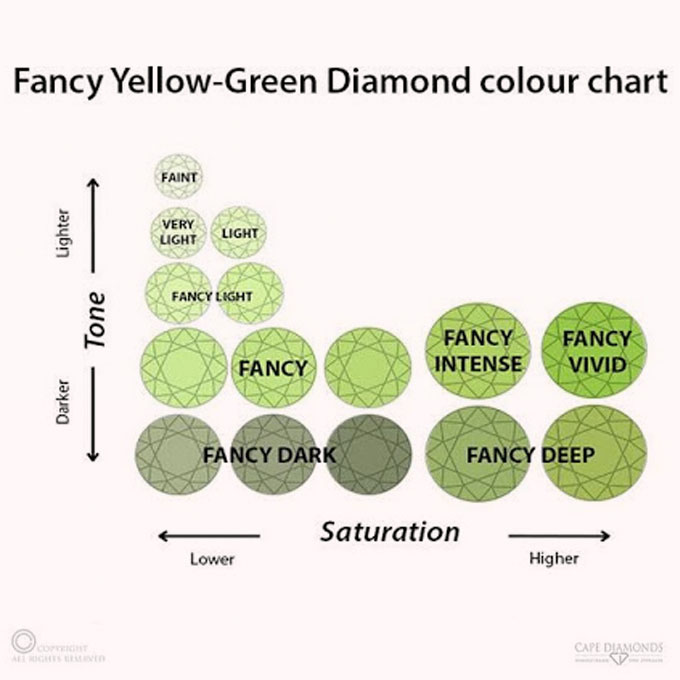
Yellow-green diamonds display a spectrum of shades, from soft and delicate to rich and vibrant. Some may appear more yellow or green, while others balance both hues evenly. This diversity allows for versatile jewellery designs, complementing various gemstones and metals.
Their rarity and unique colouration make yellow-green diamonds highly valuable. Factors like colour intensity, saturation, carat weight, and cut determine their worth, with more vivid hues commanding higher prices.
Fancy Blue-Green
text.
South Africa's Most Trusted Jeweller

Most 5 Star Reviews in South Africa
Trip Advisor
Rated No1 Retail Store in Cape Town
