
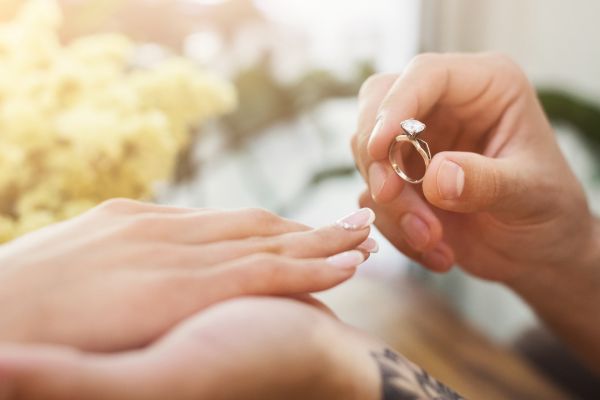
Your engagement ring is meant to be a symbol of your lifelong commitment to your partner. While the majority of rings are worn safely with no issues, metal sensitivity, allergens, and even skin sensitivity can cause discomfort for some people. It goes without saying that this is extremely challenging – especially if you have a custom ring that has been made by a designer.
If you are prone to skin irritation, it helps greatly to understand potential reactions before your ring is made. If you haven’t had any issues with other jewellery but suddenly find that your ring is causing discomfort, knowing what to do is essential. In this guide, we’ll share some information on what could be causing skin reactions, symptoms of allergic reactions, and how you can ensure that your engagement ring can be worn without any discomfort.
Engagement Rings and Skin Allergies
Here are a few things to know about engagement rings and skin allergies.
Common Allergenic Metals in Rings
The most common cause of skin reactions from jewellery such as rings, is an allergy to certain metals. Nickel is the usual culprit behind these allergic reactions. This metal is often used in gold alloys to create white gold and can also be found in lower-purity gold rings, which have less gold and more of other metals. When nickel comes into contact with the skin, it can cause irritation known as contact dermatitis, leading to redness, itchiness, and in severe cases, blistering. This is why it is important to choose a jeweller that offers premium rings that are made from pure metals. Store-bought rings may contain potential allergenic metals, and it’s harder to trace the manufacturing process as many stores import rings from outside of the country.
Symptoms of Metal Allergies
If you’re experiencing a reaction to your ring, symptoms might include itchiness, redness or a rash around the area where the ring touches your skin. You may also find that it feels like it’s chafing against your finger, making it sensitive and sometimes painful. These symptoms can appear shortly after putting on the ring and may persist until the irritant is removed. For some people, the reaction occurs only after prolonged wear, while others might react almost immediately. You may also find that certain ring designs make the irritation worse – especially if the band is thicker. If you notice any type of discomfort when wearing your ring, it’s always best to remove it rather than letting things get worse.
Non-Allergenic Metal Options
What can you do to make your ring non-allergenic? The simplest way is choosing metals that are known for their skin-friendly properties. Platinum is an excellent option, as it’s naturally white and doesn’t need to be alloyed with nickel to achieve its colour. Although this metal has a higher price tag, it is the most durable metal, with non-resistance and a shine that will never lose its brightness, unlike other metals. Choosing gold between 18K and 22K often means less chance of alloy content, making it less likely to cause a reaction.
At Cape Diamonds, we are committed to crafting premium quality engagement rings that are suitable for all skin types, budgets, and style preferences.