
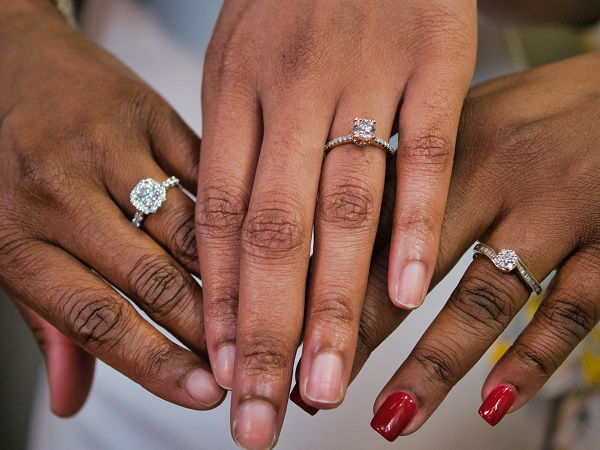
If you’re getting an engagement ring it can be overwhelming to know which cut to choose. Whether you’re choosing a ring together as a couple, designing a custom ring or choosing a ring for your love, there are many different cuts and styles out there. So many that you may not have a clue where to even begin choosing the right option. In this guide, we’ll try and make things easier by sharing a few things to consider when looking at engagement ring cuts.
Choosing Your Engagement Ring Cut
Before we get started, what do we mean when we talk about cuts? In engagement rings, this refers to the overall shape of the stone. Besides the shape, cuts also affect the way that the light catches on the diamond, which, in turn, affects the sparkle quality of the stone. There are a huge number of cuts, from classics such as round, princess, oval, cushion and pear to modern geometric styles such as trillion and kite. You can learn more about the most popular cuts over here to get a better idea of what each offers.
How do you know which one is the right choice for your ring? For starters, here are some things you’ll want to think about.
The size of your ring finger
Although the size of the stone and ring can be customised to suit your finger, the cut also plays a role in how the ring will look on your hand. Some cuts such as round, pear, oval, princess and marquise are flattering on all fingers, whether you have short or long fingers. Other cuts such as emerald may be too big for short fingers or make larger fingers look even larger. The best way to see which cuts suit your hand is to speak to your jeweller for professional advice.
The design of your ring
Round, pear, princess and marquise stones are used in a vast variety of designs. They can be used as solitaire stones or as side stones. Stones such as baguette, trillion and kite can work well in complex designs. Emerald, square and flat-topped stones work best as centre stones. Round stones are used in pave and halo designs. Remember that the centre stone is the stone that is always noticed first. Make sure you choose a cut that works well with the setting you choose, and one that balances any accent stones.
The carat and clarity of the stone
Some cuts will provide a higher level of sparkle than others, as they have been cut to catch the light, with multiple facets. Choosing a cut that has multiple facets can mean going a bit lower in carat and clarity, as the stone will look bright and clear. Cuts that have flat surface areas will not catch the light the same way, as they do not have multiple facets. This means that clarity and carat may be more important to ensure that the stone does not look dull or cloudy.
If you’re still unsure which cut is best, speak to your jeweller. A professional jeweller that offers a custom design service will help you choose the cut that suits your unique needs. To get advice for your dream engagement ring, contact Cape Diamonds today.